Bedding Guide
Wool Mattress Toppers: What to Know About Comfort, Care, and Fit
A wool mattress topper can change the feel of a bed without changing the mattress beneath it. Its natural fibers offer cushioning and can help manage moisture, but the result depends on how the topper is built, how it fits, and how it is cared for.
Published November 12, 2026
Sleep happens in a small landscape of layers: mattress, protector, sheet, blanket, and the sleeper between them. A mattress topper sits close to the center of that landscape. It can soften a surface that feels too firm, add a little insulation, or provide a fresh layer over a mattress that still offers sound support. Wool is one option for that task, valued in bedding for its springy feel and ability to absorb moisture vapor.
But “wool” does not describe one uniform sleeping experience. A thin quilted pad and a deep, generously filled topper may use the same broad material and feel entirely different. Construction, fill weight, quilting, fabric, and mattress condition all influence comfort. Before choosing one, it helps to understand what wool can—and cannot—do, how to check fit, and what its care requirements are likely to involve.
This guide is for people considering wool mattress toppers as a practical bedding choice, not as a cure for pain or a substitute for a worn-out bed. The aim is to make the details easier to assess: what changes at the sleep surface, which specifications matter, and how to keep a wool layer in usable condition.
What a wool mattress topper does
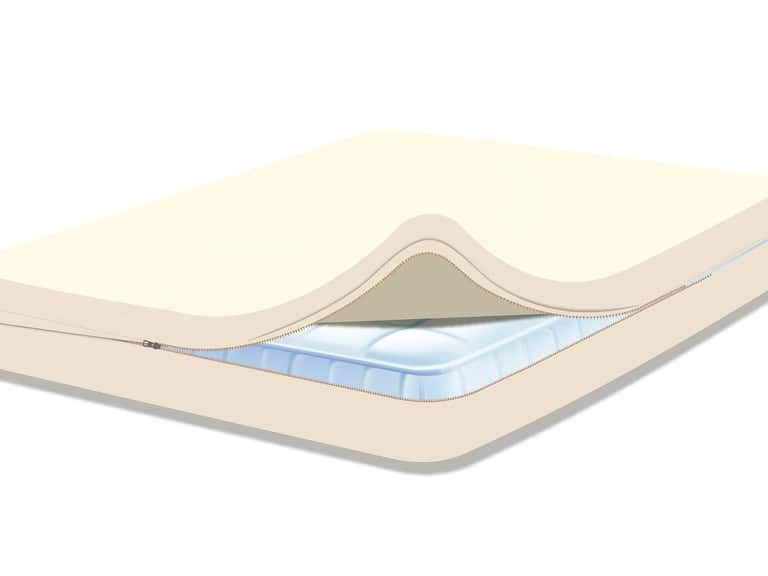
A topper is a removable comfort layer placed on top of a mattress. It is generally thicker and more substantial than a mattress protector, whose primary job is to guard against spills, dirt, or everyday wear. A topper is intended to change the surface feel. Depending on its design, it may add a modest amount of cushioning, warmth, or both.
Wool fibers have a natural crimp, giving them a degree of resilience. In a filled topper, that structure can create a soft, gently springy surface rather than the close, slow contouring associated with some foams. The amount of cushioning varies considerably: a slim pad may make only a subtle difference, while a lofty, well-filled model can feel more noticeable. Neither description guarantees a particular level of support. The mattress underneath remains the main structure supporting the body.
Wool can also absorb moisture vapor from the surrounding environment. This property may contribute to a less clammy feel for some sleepers, particularly when compared with a surface that traps heat or feels humid. It does not mean that wool actively cools a person or keeps every sleeper at one temperature. A room’s climate, mattress materials, pajamas, duvet, and individual preferences all affect how warm the bed feels.
Think of a wool topper as a surface adjustment, not a mechanical fix. It cannot restore a mattress that has developed a deep sag, broken-down edges, or persistent unevenness. If the underlying bed no longer supports you comfortably, adding another layer may disguise the problem briefly without resolving it.
How wool feels compared with other topper materials
Comparisons are useful, but broad material labels can be misleading. Foam, latex, and wool each come in different constructions, and products within the same category may vary in density, thickness, and feel. A careful comparison starts with what you want the topper to change.
- Wool: Often has a buoyant, softly cushioned feel. Its moisture absorption and insulation can influence the bed’s microclimate, while its loft and firmness depend on fill amount and quilting.
- Memory foam: Commonly contours more closely under body heat and pressure. Some sleepers like that enveloping sensation; others prefer a surface that responds more quickly or feels less close-fitting.
- Latex: Often feels resilient and responsive, with a noticeable push-back rather than a slow-sinking contour. Different latex formulations and thicknesses can change the level of firmness and pressure relief.
- Fiberfill or feather-style pads: May add a light, soft layer, though loft can shift or compress with use depending on design and maintenance.
These are general tendencies, not guarantees. A thin wool layer may feel less plush than a thick foam topper; a highly quilted wool design may feel more structured than another wool product. When possible, examine return policies, trial terms, and care instructions before purchasing. If a trial is available, use the topper with the sheets and blankets you normally sleep with, since the complete bedding system shapes the experience.
Loft, thickness, and fill weight
Loft describes how raised or lofty a layer appears, while thickness is the measured depth. Fill weight tells you how much wool is used across a given size or area. These measurements can help describe a product, but none alone predicts exactly how it will feel. Quilting can hold the fill in place and affect its distribution; the fabric casing can influence flexibility; and the wool itself may settle with use.
If you want only a small change, a thin topper may be a sensible starting point. If the mattress feels too firm and remains in good condition, a more substantial layer may provide a more noticeable cushion. Yet adding loft is not always an improvement. A very thick layer can alter how the body settles into the bed, and it may make the sleep surface feel less stable or obscure the mattress’s original character.
Consider your usual sleeping position as one part of the decision. Side sleepers often look for enough cushioning at the shoulder and hip, while back and stomach sleepers may prefer a surface that does not allow excessive sinking. These are starting points, not rules: body shape, mattress firmness, and personal comfort all matter. If you have persistent pain, numbness, or other ongoing symptoms, consult a qualified health professional rather than relying on bedding changes as treatment.
Product specifications are most useful when read together. Look for overall thickness, fill weight where provided, quilting pattern, casing fabric, and whether the topper is designed to be compressed or turned. If a maker does not explain these details, ask before assuming that two products with the same stated thickness will perform alike.
Temperature regulation: useful, but personal
Temperature is one of the most personal parts of sleep comfort. Wool is commonly used in bedding because its fibers can absorb and release moisture vapor and because the material offers insulation. That combination may help some people experience a drier, more balanced-feeling surface. It does not make a topper a cooling device, and it cannot compensate for every source of nighttime overheating.
Consider the whole bed. A wool topper beneath a waterproof cover, dense mattress protector, heavy duvet, and non-breathable sheets may feel different from the same topper under lighter, more air-permeable layers. Room temperature and ventilation matter, too. If you tend to sleep hot, review the materials in your protector and bedding before attributing the entire problem to the mattress.
Wool’s insulating qualities can also be welcome in a cool bedroom. The same feature that feels cozy to one person may feel too warm to another, especially when combined with thick blankets. If you share a bed, talk through each person’s temperature preferences and consider whether lighter covers or separate duvets could help.
Fit: the detail that keeps a topper in place
A topper should cover the mattress without sliding, bunching, or leaving large uncovered areas. Start by measuring the mattress’s length and width rather than relying only on the size printed on a label. Measure its depth as well, particularly if it has a pillow top or another built-in comfort layer. Standard mattress names are useful, but dimensions and profiles can vary.
Check how the topper attaches. Some designs use elastic straps or corner bands; others rely on the fitted sheet or the friction between layers. A topper without an attachment system may still work well, but a smooth mattress cover or active movement during sleep could make shifting more likely. Look for manufacturer guidance on compatible mattress depths and whether the topper is intended for use with a protector.
Also consider the fitted sheet. A new topper raises the total height of the bed, and the fitted sheet must have enough pocket depth to reach under the mattress securely. A sheet that barely fit before may pop loose afterward. Check the combined height of the mattress and topper against the sheet’s stated pocket depth, allowing room for the protector and any additional pad.
For an adjustable bed, confirm that the topper and its securing method can flex with the base. A layer that is too rigid, loose, or bulky may shift when the bed changes position. The same check applies to split configurations: measure each side and confirm that the bedding arrangement matches the bed’s design.
Care: airing, cleaning, and protecting wool
Care instructions vary by construction, so the product label or maker’s guidance should take priority over general advice. Some wool-filled bedding should not be machine washed; other products may allow a specific gentle wash process. The casing, stitching, wool treatment, and size all affect what is safe. Do not assume that a topper can be laundered simply because a wool pillow or comforter can.
Regular airing is a straightforward way to refresh many wool bedding items. If the manufacturer permits it, remove sheets and let the topper air in a dry, well-ventilated space. Avoid prolonged dampness. Direct sunlight and heat may affect some materials or fabrics, so check the care label before placing a wool layer outdoors or near a heater.
A removable, washable mattress protector can help keep spills and body oils from reaching the topper or mattress. Confirm that the protector does not change the surface feel more than you want, and follow its own washing instructions. Clean a spot promptly using the method approved by the maker; avoid soaking a filled layer unless the care guidance explicitly allows it. Moisture that remains trapped inside can create odors and may damage bedding.
Over time, wool fill may settle or redistribute. Follow any directions about turning, shaking, or rotating the topper. Not every design is reversible, and not every topper can be flipped, so check before doing so. Store it only when fully dry, in a breathable container or according to the manufacturer’s recommendations. Sealing damp bedding in plastic can create conditions that are hard on fibers and fabric.
Materials, certifications, and labels
People choose wool for different reasons: its texture, its moisture-handling properties, its natural origin, or its place in a particular bedding system. If material sourcing or chemical standards matter to you, read the full product description rather than relying on broad phrases such as “natural” or “eco-friendly.” Check what the wool is blended with, what the casing is made from, and whether the topper contains a backing or treatment.
Certifications may help clarify specific claims, but they are not interchangeable. Review what a named certification covers, which parts of the finished product it applies to, and whether the certificate is current. A wool certification does not automatically tell you how soft the topper will feel, how long it will last, or whether its care routine suits your household.
Ask practical questions: Is the fill entirely wool or a blend? Is the cover removable? What is the recommended cleaning method? Can the topper be used with a waterproof protector? Does the warranty cover flattening, stitching, or defects, and what conditions apply? Clear answers are more useful than vague promises of year-round comfort.
When a wool topper may—and may not—make sense
A wool topper may be worth considering if your mattress is in reasonably good condition but feels slightly too firm, or if you want to add a natural-fiber layer with a softly cushioned, potentially moisture-managing surface. It may also suit someone who prefers wool bedding and is comfortable following its specific care instructions.
It may be a poor match if you need a dramatic change in support, want a surface that closely contours to your body, or require a topper that can be tossed into a washing machine. It is also unlikely to solve sagging, persistent pressure caused by an unsuitable mattress, or a frame problem. In those cases, first identify the source of the discomfort rather than layering over it.
Budget is another consideration. Compare the expected life and maintenance needs of the topper with the cost of other options, but avoid judging value by price alone. A topper that does not fit, feels too warm, or needs care you cannot provide is unlikely to be a good long-term choice.
A practical wool topper checklist
Before choosing among wool mattress toppers, use this short checklist to connect the product specifications with the bed you already own:
- Measure mattress length, width, and depth, including any built-in pillow top.
- Decide whether you want subtle cushioning or a more noticeable change in surface feel.
- Compare thickness, fill weight, quilting, and casing materials—not just the word “wool.”
- Check how the topper stays in place and whether it is compatible with your bed base.
- Confirm that your fitted sheets will accommodate the combined mattress and topper depth.
- Read care instructions for airing, spot cleaning, laundering, turning, and storage.
- Consider whether your mattress protector and blankets could alter warmth or feel.
- Review return terms and warranty limits before buying, especially if you cannot test the topper.
A layer, not a promise
The appeal of wool bedding lies in its particular mix of softness, structure, and moisture absorption. A wool topper can make a mattress feel more inviting, but the result is shaped by details: the weight and distribution of its fill, the height it adds, the way it is secured, and the conditions in which it is used.
Measure carefully, read the care label, and start with the mattress itself. A well-matched topper can be a considered adjustment to a bed that still works. It is not a shortcut around a mattress that has reached the end of its useful life, nor a guarantee of cooler or deeper sleep. The best choice is the one whose feel, fit, and upkeep make sense for the sleeper and the whole bedding system.