Nursery Mattress Guide
Naturepedic Nursery Mattresses: Materials, Fit, and Care
A crib mattress is a small landscape with an important job: it must fit the sleep space, offer a firm and level surface, and stand up to the practical demands of everyday care. When comparing Naturepedic nursery mattresses—or any nursery mattress—families can look beyond a brand name to examine dimensions, construction, labeling, and cleaning instructions with care.
This introductory guide explains how to evaluate those details, what questions to ask, and why a well-matched mattress is only one part of a safe sleep setting.
Start with the sleep space, not the product description
In a nursery, fit is not a finishing detail. It is one of the first things to establish. A mattress that appears to fit at a glance may still leave a gap at an edge or corner, especially if the crib and mattress dimensions are not a close match. Before comparing materials or special features, identify the exact sleep space: its manufacturer, model, and stated mattress requirements.
Cribs and mattresses are made to standard size categories, but the word “standard” does not replace checking the specific fit. A crib’s interior dimensions, design, and instructions matter. The mattress should be designed for that crib and should sit flat within its frame without forcing, bending, or leaving noticeable openings around the perimeter. Follow the crib and mattress manufacturers’ directions for checking the fit; do not rely on a quick visual estimate alone.
For a Naturepedic option, begin by locating the model’s current dimensions and intended use. Compare those dimensions with the crib’s documentation, not simply with a label that says “crib size.” If a product comes in more than one profile or configuration, confirm that the particular version under consideration is appropriate for the crib and stage of use. When details are unclear, ask the manufacturer or retailer to clarify them before using the mattress.
It is also worth checking how the mattress rests in the crib. It should lie level and remain stable when placed according to the instructions. Bedding layers, pads, or accessories can change the surface and may affect fit. Keep the sleep space simple, and consult current safe-sleep guidance from trusted public-health authorities for recommendations on the sleep environment. A mattress purchase cannot substitute for following the crib’s assembly and use instructions.
A practical mattress-fit checklist
Fit can be assessed methodically rather than by instinct. Use the following checklist as a starting point, while treating the crib and mattress manuals as the final authority for their products:
- Confirm the crib identity. Find the model name or number and read its instructions for mattress dimensions and use.
- Confirm the mattress identity. Check the product label and documentation for its dimensions, model, and intended sleep space.
- Compare measurements. Check the listed length, width, and thickness against the requirements for the crib. Avoid assuming that two products fit together because both are described as standard.
- Check the perimeter. Once installed as directed, look around the edges and corners for spaces or an uneven position. Use the manufacturer’s specified fit test if one is provided.
- Recheck after changes. If the mattress is moved, replaced, or used with a different crib, verify fit again. Revisit the instructions when adjusting the crib for a new stage.
- Ask rather than guess. If a dimension, compatibility question, or fit instruction is unclear, contact the crib or mattress manufacturer before use.
A mattress cover or fitted sheet should also be compatible with the mattress dimensions and be used as directed. Avoid adding layers simply to make a surface feel softer or to compensate for a poor fit. A close, stable fit and a clear understanding of the product instructions are more useful than assumptions based on appearance.
Read material descriptions as a map of construction
Material language can be one of the most noticeable parts of a nursery mattress listing. Words such as cotton, foam, latex, waterproof, organic, or breathable may describe different parts of a product, and they do not all answer the same question. A useful comparison starts by asking where each material is used: in the core, the surface fabric, a barrier layer, a bonding component, or a removable cover.
For Naturepedic nursery mattresses, as for any brand, consult the exact model’s current product details and label. Product lines can include different constructions, and a description for one model should not be assumed to apply to another. Look for a clearly stated list of components and note whether the manufacturer describes the materials by layer. If the wording is broad, ask for more specific information rather than drawing conclusions from a single headline claim.
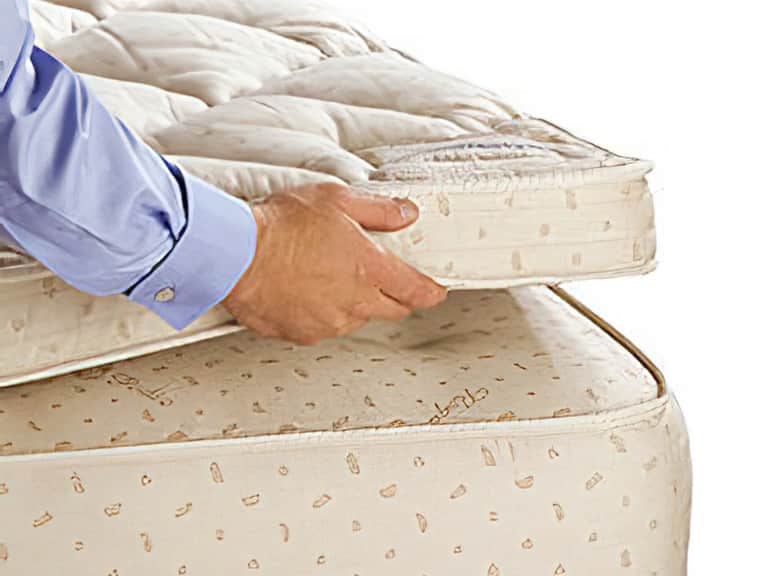
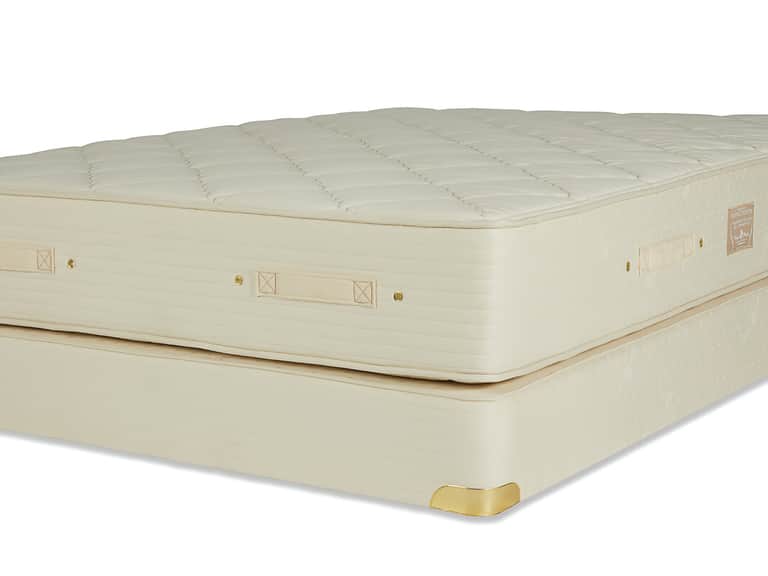
The core is the central support structure. The cover or ticking is the fabric on the outside. Some mattresses may also include an internal moisture barrier or other layers. These components can influence feel, weight, handling, and care requirements. A claim about one layer does not necessarily describe every layer in the mattress, so read the full description and any available product documentation.
Certifications, when present, should be read precisely. A certification may apply to a particular material, finished product, or production standard; the scope depends on the certifying program. Check what the label actually says and which component it covers. Certification can offer useful information, but it does not by itself establish that a mattress is the right size for a crib, that it should be cleaned a particular way, or that it is suitable for every household’s needs.
Families may also encounter terms such as “natural,” “organic,” or “low-emission.” These terms are not interchangeable. Look for the named material, the stated standard or certification, and the specific product to which a claim applies. A careful reader does not need to decode every technical detail alone: manufacturers should be able to explain what a layer is made of, how it is constructed, and how to care for it.
Firmness, support, and infant sleep
Mattress comfort is personal in many adult settings, but a nursery mattress is not selected according to an adult’s preference for plushness. For an infant sleep space, use the firm, flat sleep surface recommended by current safe-sleep guidance and by the crib and mattress instructions. Do not judge suitability by pressing a hand into the surface or by comparing it with a household bed; follow the relevant guidance and product labeling.
Descriptions such as “supportive” or “comfortable” are not a substitute for clear instructions about intended use. If a listing does not state whether a model is meant for an infant crib, verify that point. Likewise, avoid using an additional topper or a soft layer to alter the surface unless the crib and mattress manufacturers and current safety guidance explicitly support that use. Accessories can change the sleep surface and may affect fit.
Some cribs have adjustable mattress-support positions for different stages. Those settings should be used only as described in the crib manual. A mattress should rest on the designated support system, and caregivers should check that the frame, support, and mattress are assembled and positioned correctly. If a product feature sounds convenient but its purpose is not clear, consult the manufacturer’s instructions before relying on it.
Safe-sleep recommendations can be updated as evidence and guidance evolve. For current advice, consult recognized public-health sources, such as the American Academy of Pediatrics and government health agencies. This article is a consumer guide to comparing materials and fit, not medical advice, and it does not replace a pediatric clinician’s guidance for an individual child.
Care instructions matter in everyday life
A nursery mattress may face spills, moisture, and routine changes of sheets. The most useful care plan is the one the manufacturer specifies for the exact mattress model. Before purchase, find the care section in the product documentation and look for instructions on spot cleaning, surface wiping, drying, removable covers, and any restrictions on detergents or disinfectants.
Do not assume a mattress is washable because a cover looks like fabric, or that an internal layer can tolerate soaking. Some components may be damaged by excess water, heat, abrasive cleaners, or strong chemicals. Follow the label instead of improvising. If a cover is removable, confirm whether it is intended to be removed and whether it can be machine washed; some covers are not designed for laundering even when they can be unzipped.
When cleaning is permitted, use only the method stated in the instructions. Allow treated areas to dry fully before putting bedding back in place. Moisture left within a mattress or cover can create odors and may affect materials over time. If an accident penetrates beyond the surface or a cleaning question is not addressed in the manual, contact the manufacturer for advice appropriate to that construction.
A fitted sheet should be the correct size and should fit securely. Check it regularly for loose fabric, tears, or an elastic edge that no longer holds. Keep the sleep surface uncluttered in accordance with safe-sleep guidance; pillows, loose blankets, soft toys, and other unapproved items should not be added to an infant’s sleep space. A mattress protector, if used, should be specifically compatible with the mattress and used according to both products’ instructions.
Questions to ask when comparing Naturepedic models
When several options share a brand name, the model-level details become especially important. A short list of questions can help families compare like with like and keep attention on information that affects daily use:
- What are the exact dimensions and thickness of this model, and which crib types is it intended to fit?
- What materials make up the core, outer cover, and any internal barrier or additional layer?
- Are material or environmental claims tied to a named certification, and what part of the product does that certification cover?
- What does the manufacturer say about firmness, intended age or use, and compatibility with the crib’s support system?
- How should spills or routine surface dirt be handled? Can any cover be removed, and what cleaning methods should be avoided?
- What are the warranty terms, and which conditions—such as staining, improper cleaning, or normal wear—are addressed?
- Where can the complete care and safety instructions be found after purchase?
These questions are useful whether a family is comparing Naturepedic with another brand or looking at models within the same range. They also help separate measurable facts—dimensions, materials, care methods—from general impressions. A comparison chart can make the process easier: list each model across the top and record fit, construction, care, warranty, and documentation in separate rows.
Moving, storing, and replacing a mattress
Nursery furniture changes as households move, children grow, or a room is reconfigured. If a mattress is transported, stored, or used in another crib, check the manufacturer’s instructions first. Some mattresses should be kept flat or protected from moisture; others may have specific limits on bending or handling. Avoid folding or compressing a mattress unless the manufacturer expressly allows it.
Before reusing a mattress, inspect the surface, seams, edges, and any cover for damage, persistent stains, or signs that the construction has changed. Reconfirm that it fits the crib in which it will be used. A mattress that once fit one sleep space is not automatically compatible with another, even when both are described as crib-size. Check its label and documentation, and contact the manufacturer if the model or history is uncertain.
Follow any guidance about product lifespan and warranty coverage. There is no universal calendar date that determines when every mattress should be replaced; condition, fit, and manufacturer recommendations matter. If the mattress is damaged, does not lie flat, has a compromised cover, or no longer meets the crib’s fit requirements, seek manufacturer guidance before use. Never try to repair a structural problem with extra padding or a homemade cover.
A calm, evidence-minded way to choose
Shopping for nursery equipment can draw attention in many directions at once: labels, materials, warranties, reviews, and promises of comfort. A steady process keeps the decision grounded. First establish compatibility with the crib. Then review the exact model’s construction and care instructions. Finally, consider the family’s practical priorities, such as cleaning preferences, handling weight, availability of documentation, and budget.
It can help to separate three kinds of information. Fit information includes dimensions, compatibility, and installation. Material information explains what the mattress is made of and which claims are supported by documentation. Care information describes cleaning, drying, storage, and warranty conditions. Keeping those categories distinct makes it easier to see what is known and what still needs clarification.
Brand reputation and attractive wording may prompt a closer look, but they should not replace the label or manual. If a claim is important to the decision, look for a clear explanation of what it means for that specific model. If a question remains unanswered, ask before purchase. A transparent response should identify the product and address the question directly, rather than relying on broad language that could apply to many different items.
In the end, the best-informed choice is not necessarily the one with the longest feature list. It is the option whose dimensions, intended use, materials, and maintenance instructions are understood—and that fits the crib as directed. Careful comparison can turn a crowded set of product claims into a manageable checklist.
A final checklist before the first night
When the mattress arrives, take time to confirm the details before setting up the sleep space. Read the labels and instructions, check that the model matches what was ordered, and inspect it for visible damage. Place it in the crib as directed and verify the fit around the perimeter. Use only bedding and accessories that are appropriate for the mattress and crib, and follow current safe-sleep guidance for the child’s sleep environment.
- Keep the receipt, model information, care instructions, and warranty documentation together.
- Save the manufacturer’s contact information for later questions about cleaning or compatibility.
- Use the mattress only in the sleep space and configuration for which it is intended.
- Recheck the crib and mattress after any move, adjustment, or change in setup.
- Consult current public-health guidance for safe sleep practices, and ask a qualified health professional about individual medical concerns.
A nursery mattress is a quiet piece of equipment, easy to overlook once the room is assembled. Yet its dimensions, materials, and care requirements shape how it works in daily life. Taking a few deliberate steps—checking the exact fit, reading the full material description, and following the cleaning instructions—helps families compare Naturepedic nursery mattresses thoughtfully and build a sleep space with fewer unanswered questions.